Scientific publication
animal health
Veterinarian profiles associated with PRRS stabilization success
PRRS stabilization program’s success relies as much on veterinarian profile and collaboration as on the technical tools available.
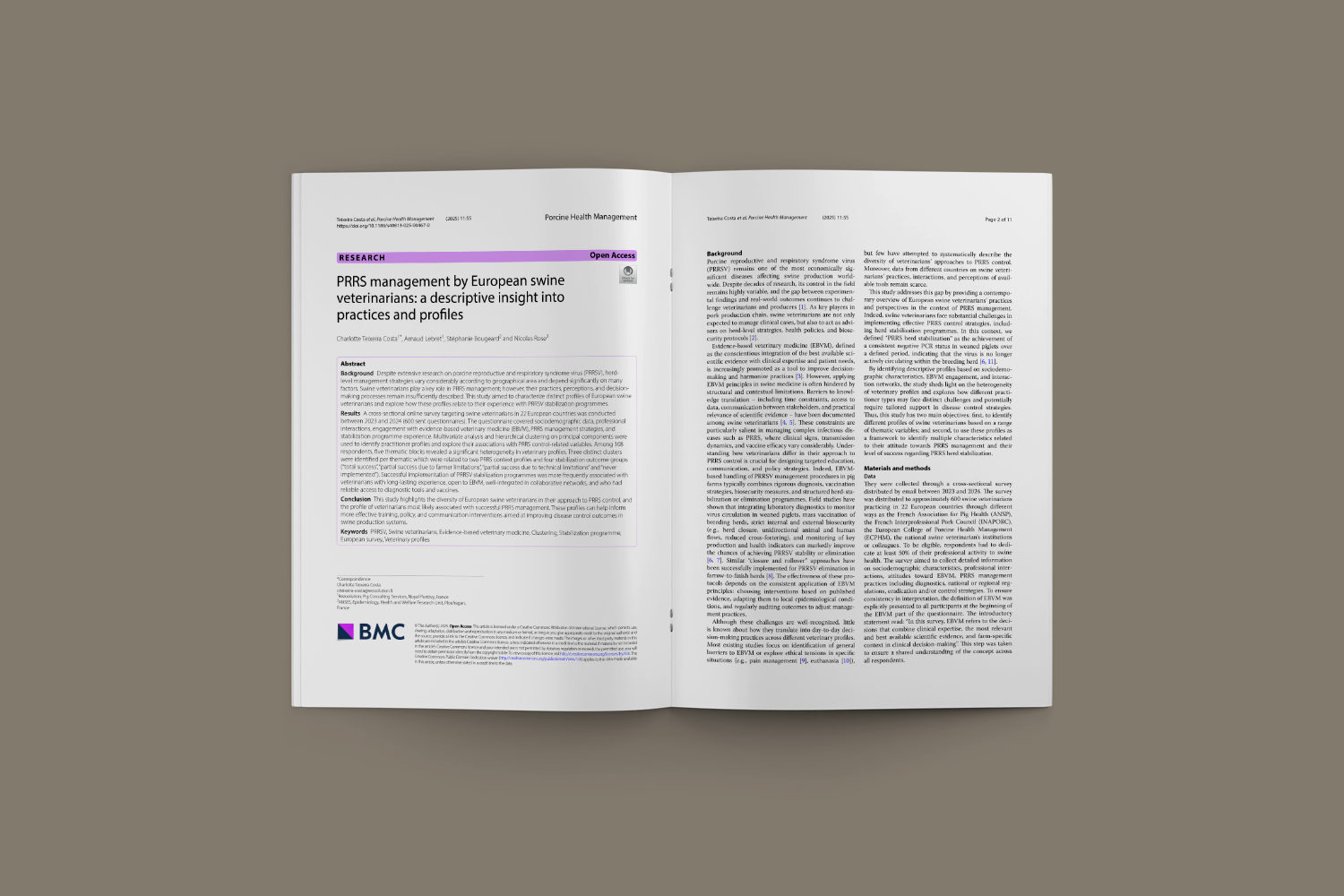
Background. Despite extensive research on porcine reproductive and respiratory syndrome virus (PRRSV), herd level management strategies vary considerably according to geographical area and depend significantly on many factors. Swine veterinarians play a key role in PRRS management; however, their practices, perceptions, and decision-making processes remain insufficiently described. This study aimed to characterize distinct profiles of European swine veterinarians and explore how these profiles relate to their experience with PRRSV stabilization programmes.
Results. A cross-sectional online survey targeting swine veterinarians in 22 European countries was conducted between 2023 and 2024 (600 sent questionnaires). The questionnaire covered sociodemographic data, professional interactions, engagement with evidence-based veterinary medicine (EBVM), PRRS management strategies, and stabilization programme experience. Multivariate analysis and hierarchical clustering on principal components were used to identify practitioner profiles and explore their associations with PRRS control-related variables. Among 108 respondents, five thematic blocks revealed a significant heterogeneity in veterinary profiles. Three distinct clusters were identified per thematic which were related to two PRRS context profiles and four stabilization outcome groups (“total success”, “partial success due to farmer limitations”, “partial success due to technical limitations” and “never implemented”). Successful implementation of PRRSV stabilization programmes was more frequently associated with veterinarians with long-lasting experience, open to EBVM, well-integrated in collaborative networks, and who had reliable access to diagnostic tools and vaccines.
Conclusion. This study highlights the diversity of European swine veterinarians in their approach to PRRS control, and the profile of veterinarians most likely associated with successful PRRS management. These profiles can help inform more effective training, policy, and communication interventions aimed at improving disease control outcomes in swine production systems.