Welcome Pauline

Welcome Pauline

Pauline joins Rezoolution

Welcome Pauline.

Pauline graduated from the Toulouse National Veterinary School in 2011 and holds the French Certificate in Advanced Veterinary Studies in Pig Production. After 12 years as a pig veterinary practitioner in France, she worked as a technical manager at a pharmaceutical company for 2 years, before joining our team in 2025 as a consultant. Pauline has developed expertise in pathogens’infection dynamics and prevention (particularly PRRSV), and also in marketing and analysis of market for drugs products.

Probable reversion to virulence of a PRRSV-1 MLV vaccine strain

Probable reversion to virulence of a PRRSV-1 MLV vaccine strain

Scientific publication

animal health

Probable reversion to virulence of a PRRSV-1 MLV vaccine strain

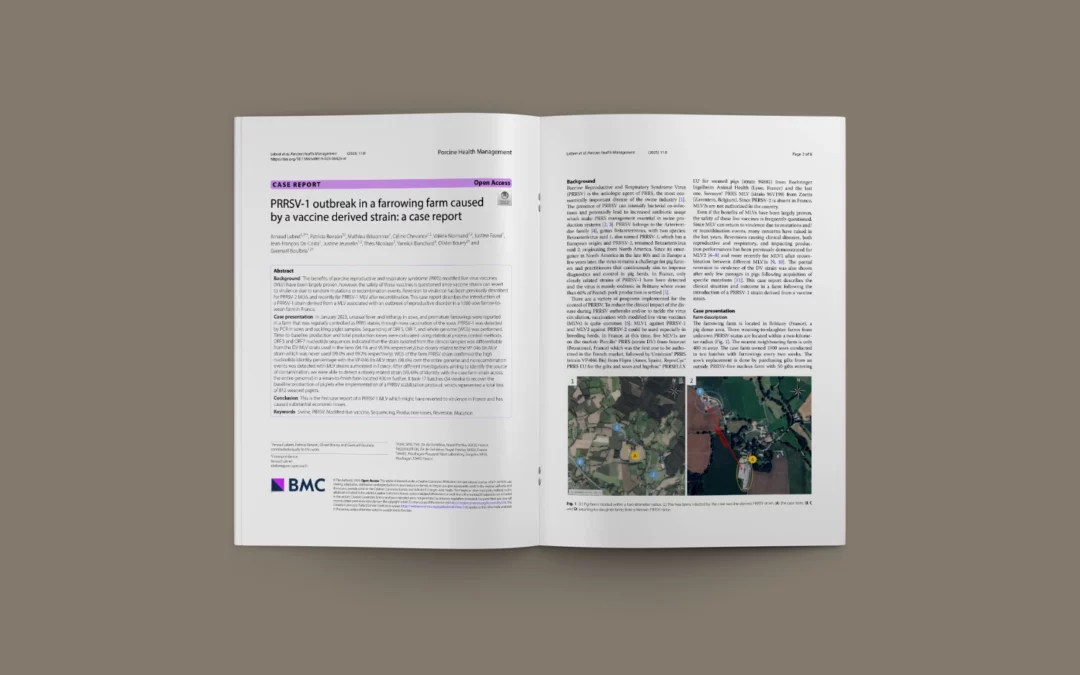
Our team published the first case report of a PRRSV-1 MLV which might have reverted to virulence in France and has caused substantial economic losses.

The benefits of porcine reproductive and respiratory syndrome (PRRS) modified live virus vaccines (MLV) have been largely proven, however, the safety of these vaccines is questioned since vaccine strains can revert to virulence due to random mutations or recombination events. This case report describes the introduction of a PRRSV-1 strain derived from a MLV associated with an outbreak of reproductive disorder in a 1000-sow farrow-to-wean farm in France. It took 17 batches (34 weeks) to recover the baseline production of piglets after implementation of a PRRSV stabilization protocol, which represented a total loss of 812 weaned piglets.

A Bayesian statistical model to predict stillbirth rate

A Bayesian statistical model to predict stillbirth rate

Scientific publication

animal health

A Bayesian statistical model to predict stillbirth rate

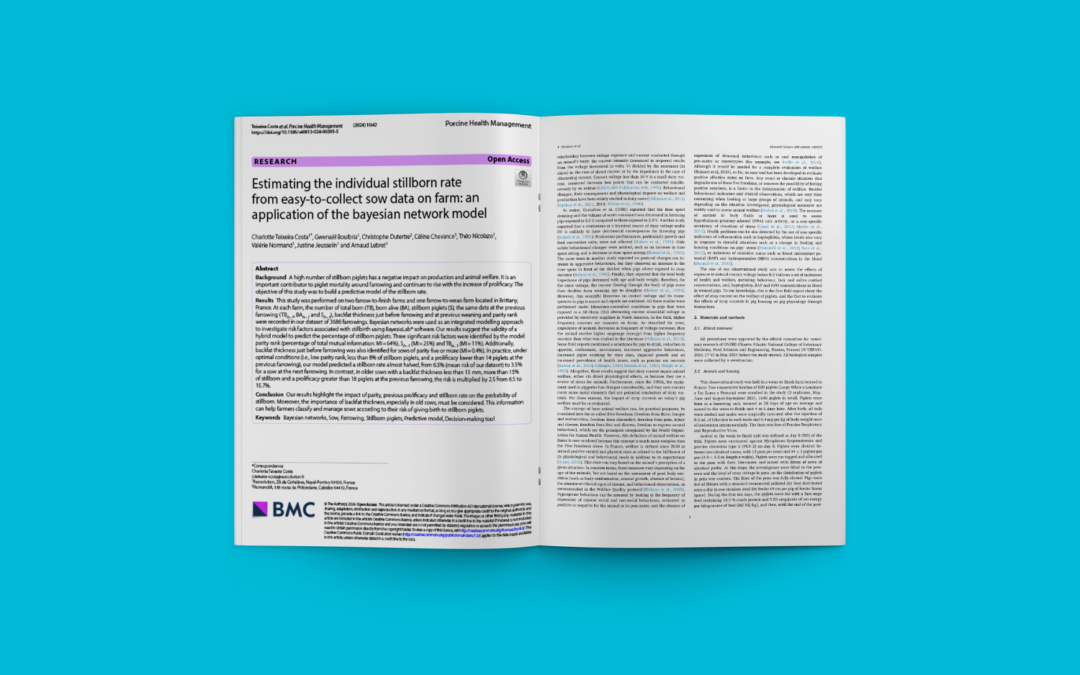
The objective of this study was to build a predictive model of the stillbirth rate using field data that can be easily recorded on pig farms.

A high number of stillborn piglets has a negative impact on both production and animal welfare. It is a significant contributor to piglet mortality around farrowing and continues to rise with increasing prolificacy. The objective of this study was to build a predictive model of the stillbirth rate using field data that can be easily recorded on pig farms. This model highlights the impact of parity, previous prolificacy, and previous stillbirth rate on the probability of stillbirth.

Stray currents in pig housing increase socio-negative behaviours and may affect their welfare

Stray currents in pig housing increase socio-negative behaviours and may affect their welfare

Scientific publication

animal health

Stray currents in pig housing increase socio-negative behaviours and may affect their welfare

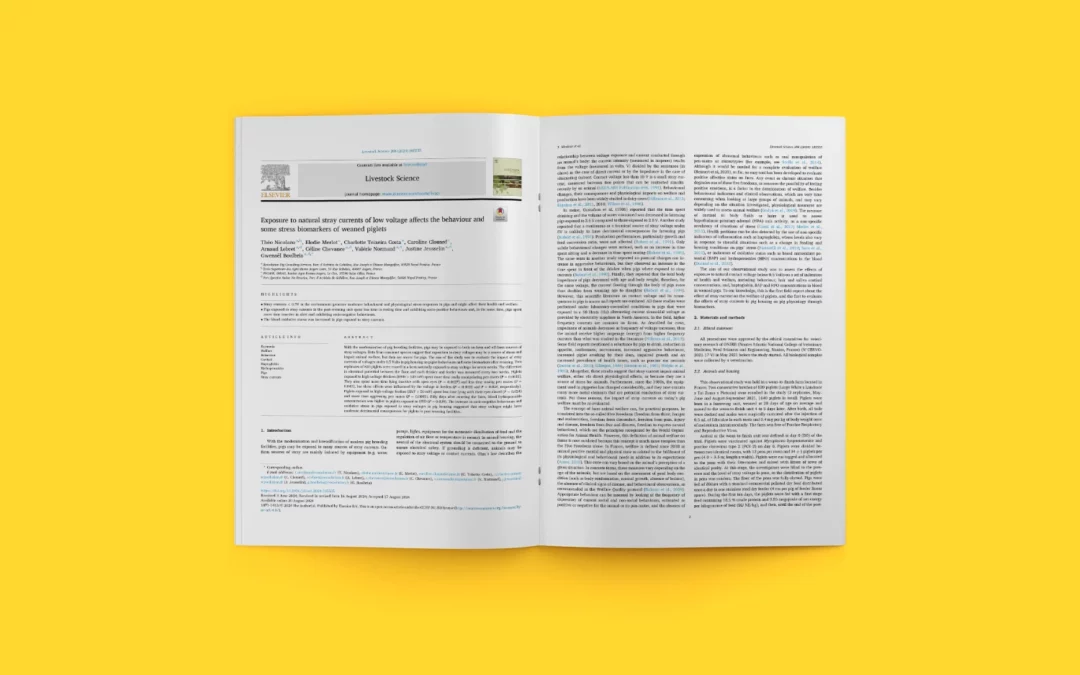
We recorded an increase in socio-negative behaviours and a decrease in socio-positive behaviours in the presence of stray currents in drinkers and feeders in piglets exposed to stray voltages < 0.5V.

This publication is a proof-of-concept and the first step for other trials with the purpose of gaining knowledge about the complex and controversial topic of stray currents in pig housing. Stray currents could be remediated by checking the proper grounding of the on-farm electrical systems, or by disconnecting or replacing the offending equipment, or by filtering the high-frequency transients generated by the equipment. In our study, we observed a decrease in resting time, an increase of time spent inactive in alert, an increase in socio-negative behaviours and a decrease in socio-positive behaviours in the presence of stray currents in drinkers and feeders. Moreover, the blood oxidative status of piglets was also increased, particularly in pigs exposed via drinkers. This observational field study showed that stray currents of less than 0.5V in the pig’s environment generate moderate behavioural and physiological stress responses, and suggest that they might affect the health and welfare of pigs. So, their prevention and remediation is a key point to ensure the welfare and the health of pigs.