
by breizhtandemrezoolution | 12 Jan 2022 | Scientific publications
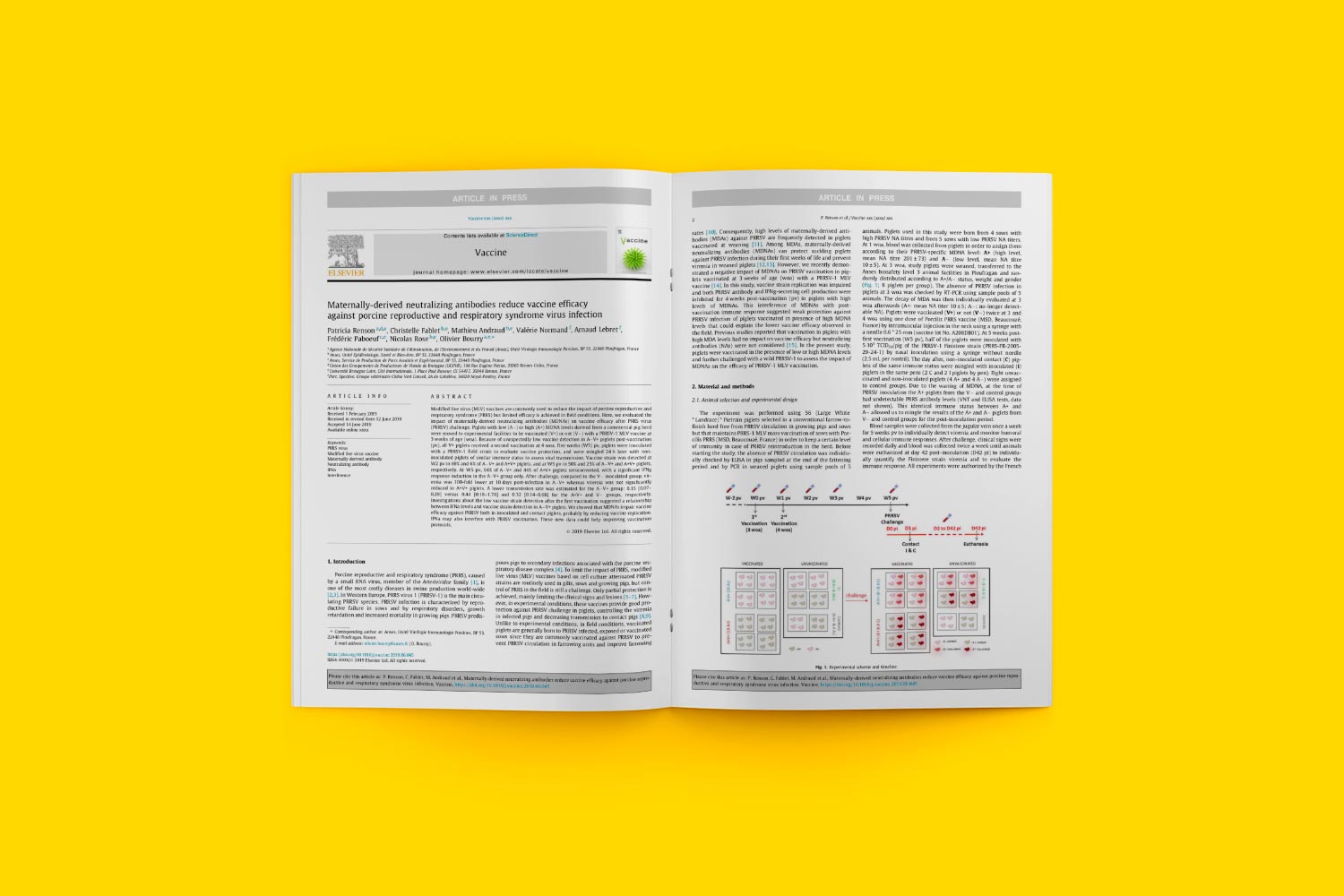
Maternally-derived antibodies reduce vaccine efficacy against PRRS virus
We showed that MDNAs impair vaccine efficacy against PRRSV both in inoculated and contact piglets, probably by reducing vaccine replication.
IFNa may also interfere with PRRSV vaccination. These new data could help improving vaccination protocols.
by breizhtandemrezoolution | 12 Jan 2022 | Scientific publications
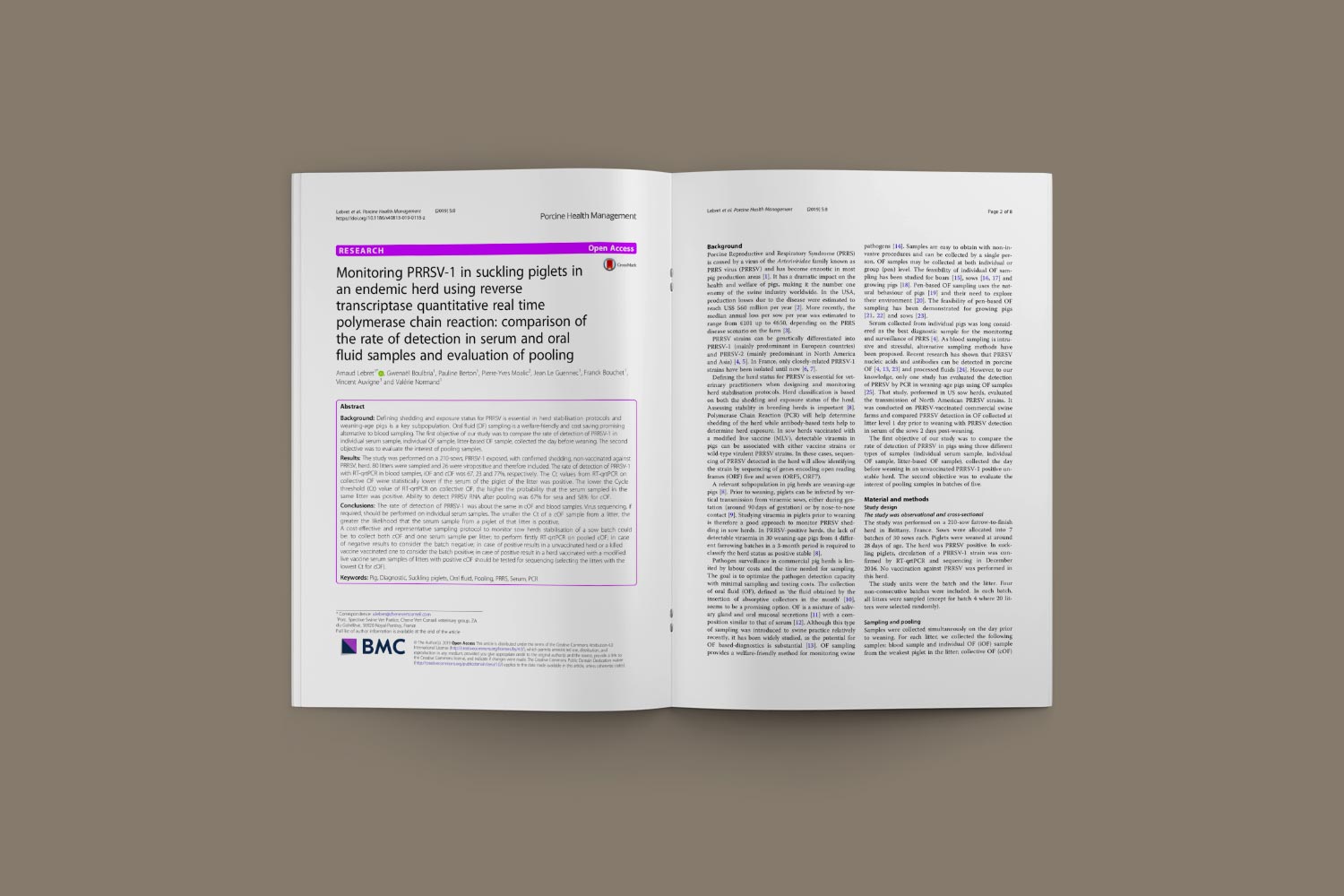
OF sampling at weaning for PRRSV-1 detection using PCR
The rate of detection of PRRSV-1 was about the same in OF and blood samples. Virus sequencing, if
required, should be performed on individual serum samples but we failed to sequence virus from OF (higher Ct).
by breizhtandemrezoolution | 12 Jan 2022 | Scientific publications
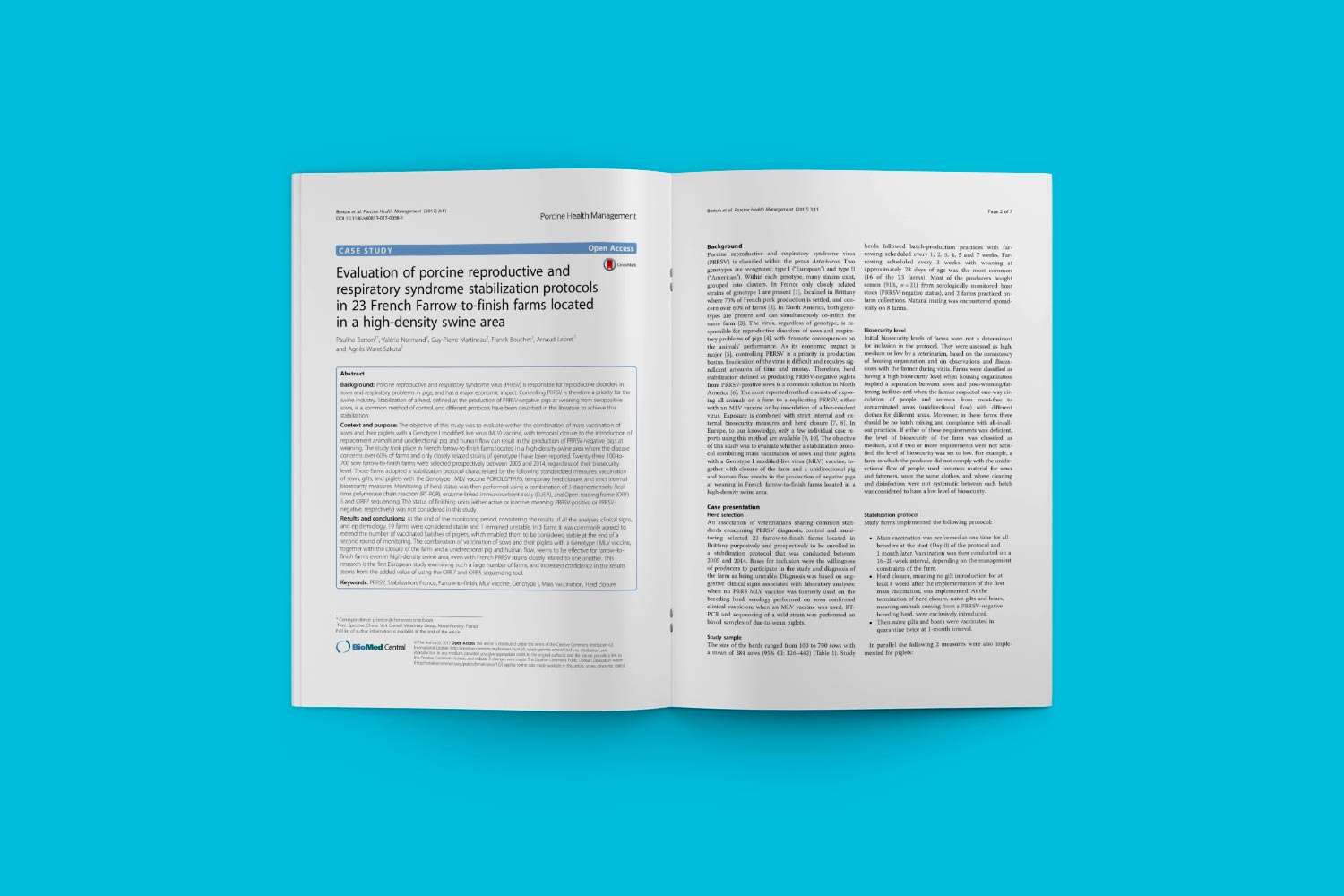
Our PRRSV-1 stabilization protocol : it is possible !
This case study published in 2017 reported our PRRSV-1 stabilization protocol and its effectiveness in 23 French herds.
by breizhtandemrezoolution | 12 Jan 2022 | Scientific publications
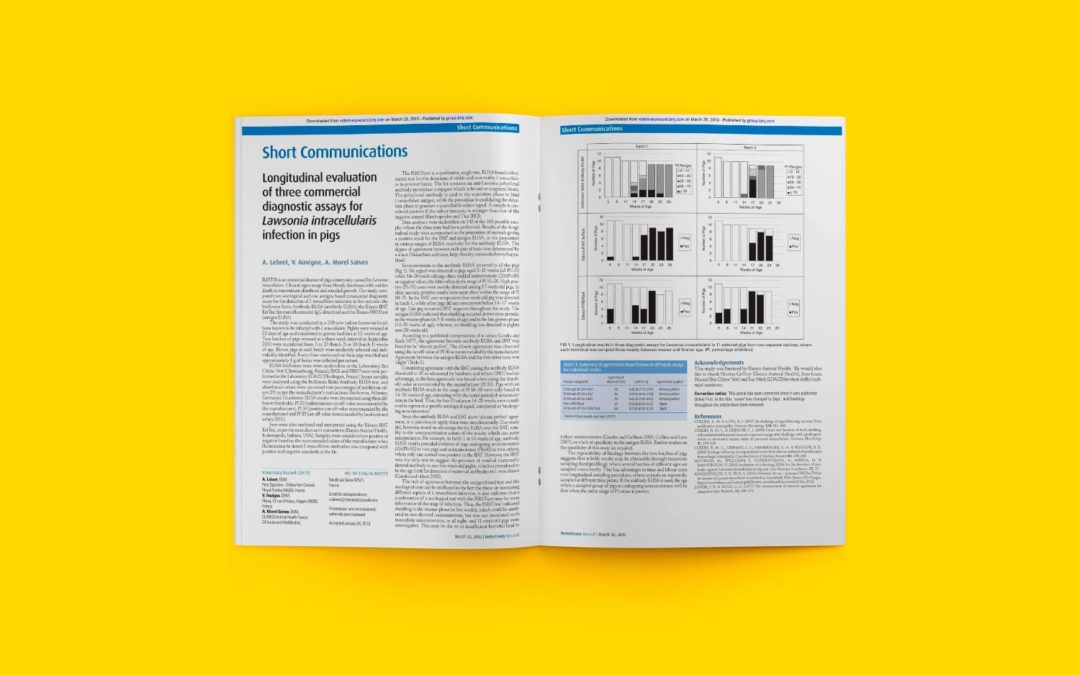
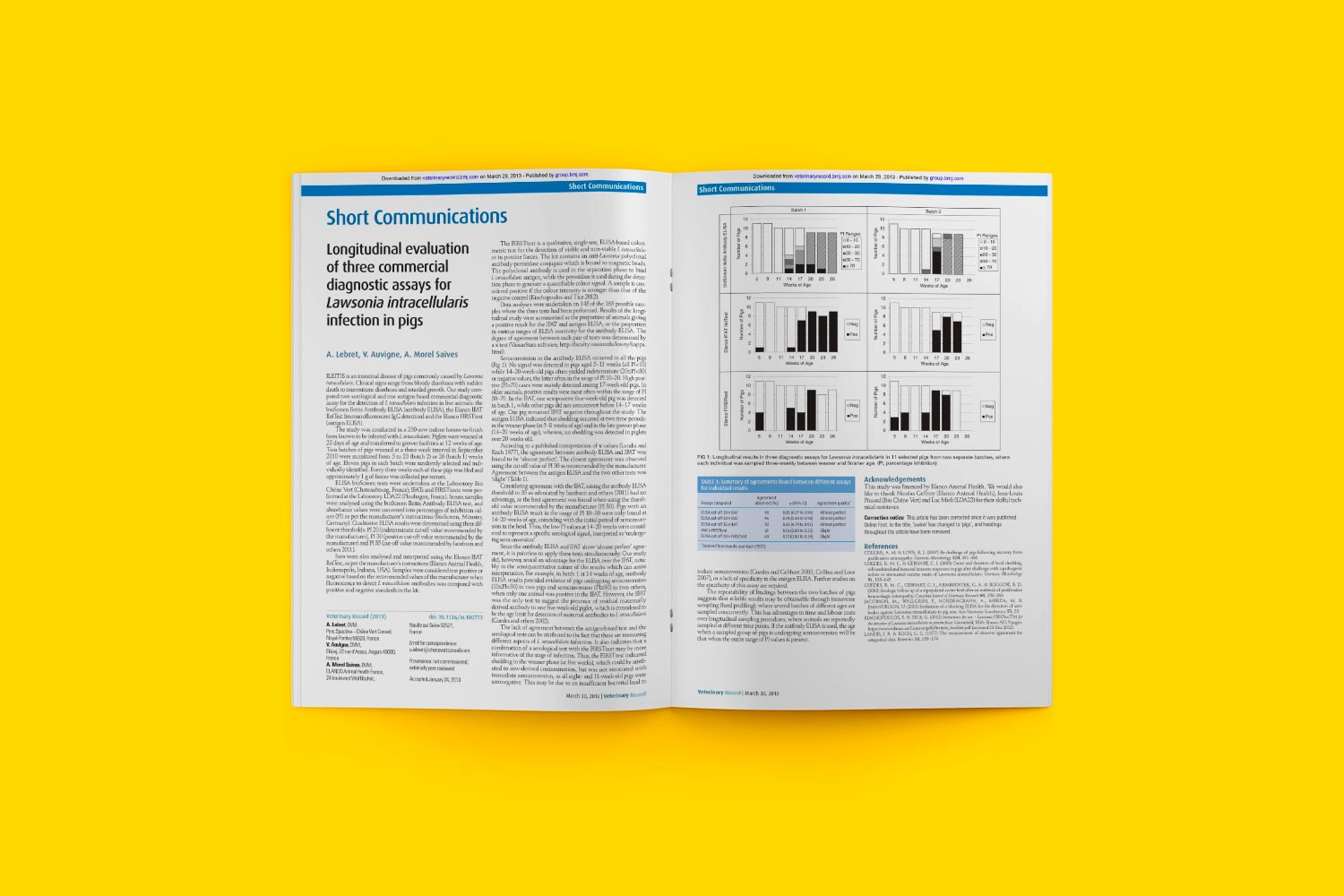
Evaluation of 3 serological assays assays for ileitis diagnosis
This study reported that reliable results may be obtainable through transverse sampling (herd profiling), where several batches of different ages are sampled concurrently. This has advantages in time and labour costs over longitudinal sampling procedures, where animals are repeatedly sampled at different time points.
by breizhtandemrezoolution | 12 Jan 2022 | Scientific publications
Lung lesions scoring: to be interpreted carefully
Enzootic pneumonia is a major health and economic issue in a number of French farms, despite the widespread use of vaccination. To assess the efficacy of a control program, vet practitioner can use different diagnostic methods like observation of clinical symptoms, lung lesion scoring at slaughter and laboratory tests. On a 200-sow farrow-to-finish farm with important respiratory signs caused by Mycoplasma hyopneumoniae, a medication protocol has been implemented on two batches,. The treated batches were compared to two non-treated control batches regarding infection dynamic of M. hyopneumoniae. In the four batches, we performed clinical evaluation, serological screening and lung examination at slaugther.
The pigs from the treated batches have developed disease later than the control pigs, seroprevalence to M. hyopneumoniae was lower among finishers from treated batches than those from control batches. However, lung scoring showed statistical differences between the treated and untreated batches with more lesions in pigs from the treated batches and more lungs with scarre tissue in pigs from the untreated batches. These results question about interpretation of lung lesions scoring diagnosis method.

Recent Comments